When you search for information on aluminum diamond plate thickness, you’re likely looking for more than just a number. This specification is fundamentally linked to your project’s safety, cost, durability, and ultimate success. Choosing the wrong thickness can lead to risks from insufficient load-bearing or unnecessary expenses for over-specified strength. This guide delves into this core parameter to help you make an informed decision.
Thickness is typically expressed in millimeters (mm) or inches (“). Millimeters are the most universal and precise unit in engineering. Inches may be used in contexts involving imported materials or certain conventions. Key conversions include:
– 1/8 inch ≈ 3.2mm
– 3/16 inch ≈ 4.8mm
– 1/4 inch ≈ 6.4mm
Common thicknesses for aluminum tread plate generally range from 0.8mm to 6.0mm, with the following being most widely used:
|
Thickness Range |
Key Characteristics |
Typical Applications |
|
Light-Gauge (1.0mm-2.0mm) |
Lightweight, Cost-Effective, Easy to Form |
Decorative cladding, vehicle interior panels, furniture accents, sign backings. |
|
Medium-Gauge (2.5mm-4.0mm) |
Versatile, Offers Best Value |
Truck/trailer flooring, industrial platforms, walkways, warehouse shelving decks. |
|
Heavy-Gauge (5.0mm and above) |
High Strength, Superior Resistance to Bending |
Heavy-duty vehicle steps, dock boards, high-traffic industrial flooring, special equipment structures. |
* Static Load: The weight of stored items. For loads exceeding 300 kg per square meter, consider 4mm or thicker plate.
* Dynamic Load & Impact: Frequent traffic from forklifts or carts. This demands the highest thickness specification. 4mm is often the starting point, with heavy forklifts requiring 5-6mm or more.
The wider the spacing between support beams underneath, the greater the thickness required. For example, under the same load, a 1.5-meter span may require a thicker gauge than a 1-meter span.
In corrosive settings (e.g., chemical plants, coastal areas) or high-wear applications, choosing a slightly thicker plate provides a greater safety margin and extends service life. It ensures structural integrity remains even if the raised pattern wears down over time.
Thickness directly impacts material cost and overall weight. The art of selection lies in finding the most economical thickness that still meets all safety and performance requirements, thus avoiding “over-engineering.”
Truth: Slip resistance is primarily determined by the pattern design and height of the raised lug. Thickness mainly provides structural support. A sufficiently thick plate ensures the pattern remains effective after long-term wear, but initial slip resistance is not directly related to thickness.
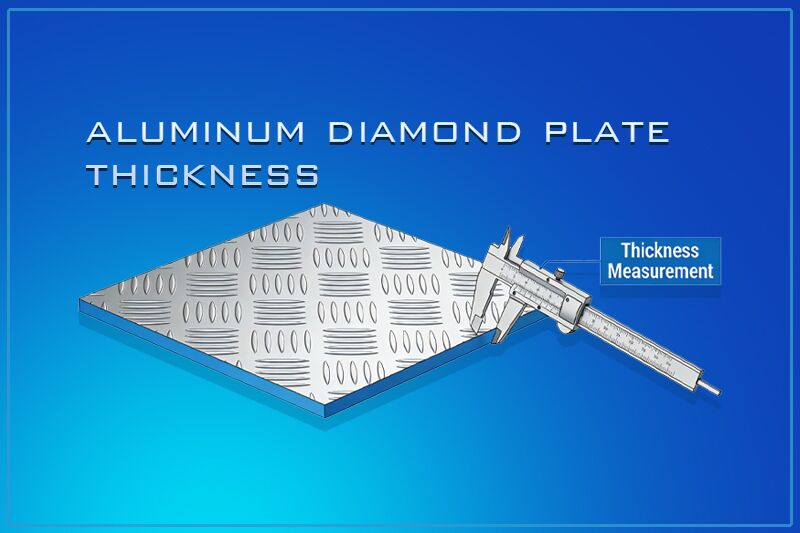
Use calipers to measure the “valley” of the pattern (the flat base area), not the top of the raised lug. This gives the true base metal thickness.
Selecting the correct thickness is foundational to your project’s safety and economy. As a dedicated manufacturer, Mingtai Aluminum supplies high-quality patterned aluminum sheet in a full range of standard and custom thicknesses, from 0.8mm to over 6.0mm. We provide not just product, but also professional expertise to help you perfectly match your needs, achieving the optimal balance of strength, longevity, and cost.
Q: What is the most commonly used thickness for aluminum diamond plate?
A: For most industrial applications like truck beds and work platforms, 3mm and 4mm are the most versatile choices, offering the best balance between load capacity and cost.
Q: Can I order a custom, non-standard thickness?
A: Yes. Mingtai Aluminum possesses strong rolling mill capabilities and can provide custom production to meet specific project requirements for non-standard thicknesses.
Q: How can I simply estimate what thickness my project needs?
A: Start by evaluating two points: 1. The maximum dynamic/static load weight; and 2. The spacing of the support framework. Consulting a professional supplier like us with this information will yield the most reliable specification advice.