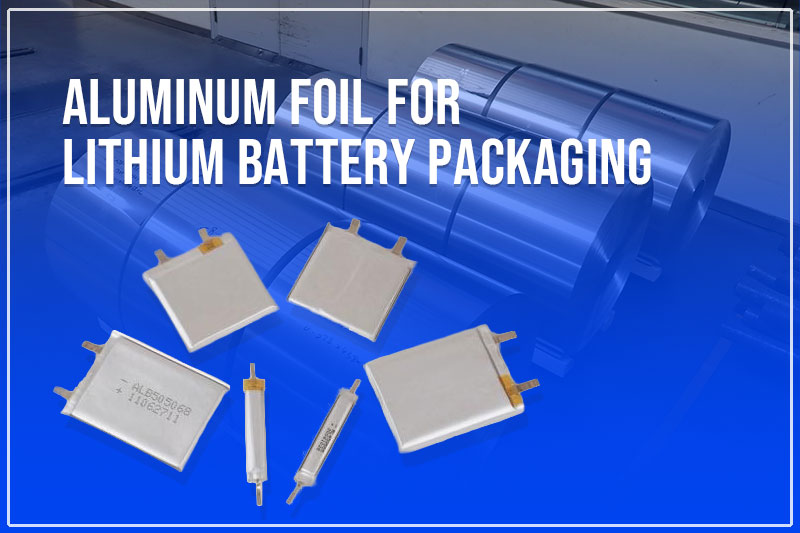
For manufacturers of soft‑pack batteries, the quality of aluminum foil for lithium battery packaging directly impacts cell safety, cycle life, and production yield. As the electric‑vehicle and energy‑storage sectors continue to expand, the demand for reliable pouch‑cell materials has never been higher. This guide outlines the essential technical specifications, selection criteria, and supplier evaluation factors that engineering and procurement teams should consider when sourcing this critical material.
In the typical three‑layer structure of aluminum‑plastic film, the middle aluminium layer serves as the absolute barrier. Its primary functions are:
– Moisture and oxygen block – Prevents external water vapour and oxygen from penetrating the cell, which would otherwise cause electrolyte degradation, swelling, and potential thermal runaway.
– Electrolyte containment – Stops internal electrolyte from seeping out, reducing corrosion and short‑circuit risks.
– Formability – Must withstand deep‑drawing processes during cell formation without cracking or generating pinholes.
Any defect in this thin metal layer can become a hidden failure point over the battery’s service life. Therefore, purity, uniformity, and mechanical consistency are non‑negotiable.
Three parameters matter most when evaluating raw foil for packaging applications.
Alloy grade – The industry‑recognised choices are 8021 and 8079.
– 8021 in O temper offers higher elongation (≥20%), making it suitable for deep‑drawing consumer‑type batteries.
– 8079 in H18 temper delivers tensile strength in the range of 160‑200 MPa, preferred for power‑cell applications where rigidity is prioritised.
Thickness – A reliable barrier requires a minimum thickness of 20 microns. Typical ranges by application:
– Consumer electronics (phones, laptops): 30‑45 μm
– Electric‑vehicle power batteries: 40‑80 μm
– Stationary energy storage: 60‑80 μm or thicker
Surface quality – The foil must be clean, flat, and free from oil residue, scratches, oxidation marks, or pinholes. Surface wettability (dyne level) and residual oil content are also tightly controlled to ensure strong adhesion during subsequent lamination.
Selection is not about picking the “best” alloy – it is about matching material properties to the specific forming and durability requirements of your production line.
|
Application Type |
Priority |
Recommended Direction |
|
Consumer‑grade pouch cells |
High elongation, ultra‑low pinholes |
8021‑O, thinner gauges |
|
EV power batteries |
Strength + formability balance |
8021 or 8079, medium gauges |
|
Energy storage systems |
Long‑term durability and safety |
Heavier gauges for added robustness |
Before committing to large volumes, it is wise to run trial batches through your actual lamination and forming equipment. Data sheets are useful, but real‑line performance reveals the true compatibility.
A reliable raw‑foil supplier provides more than just competitive pricing. Consider these aspects in your assessment:
– Quality management – IATF 16949 (automotive) and ISO 9001 certifications indicate robust process controls.
– Batch‑to‑batch consistency – Request statistical process control (SPC) data from recent production runs to verify thickness tolerances and mechanical stability.
– In‑house inspection – Does the supplier perform online pinhole detection, thickness measurement, and surface defect scanning?
– Capacity and lead time – Can they scale with your growth and maintain stable delivery during peak demand?
Each shipment should include a mill test certificate (MTC) that clearly lists alloy composition, mechanical properties, and dimensional tolerances – essential for traceability.
Thin as it may be, packaging foil is a strategic material that influences battery safety, production yield, and long‑term warranty risk. A thorough understanding of alloy grades, thickness requirements, surface quality, and supplier capabilities forms the foundation of a sound sourcing strategy. For those who produce pouch cells, investing time in this evaluation pays dividends in reliability and performance. Ultimately, sourcing aluminum foil for lithium battery packaging is not just a procurement task – it is a decision that shapes the integrity of every cell that leaves your factory.
*Mingtai Aluminum supplies raw 8021 and 8079 battery foil from 20μm upward, backed by IATF 16949‑certified quality and global shipping capabilities.*
Q: What is the minimum foil thickness for battery packaging?
A: At least 20 microns to ensure effective moisture and gas barrier.
Q: Which alloy is better – 8021 or 8079?
A: 8021‑O offers higher elongation for deep‑drawing; 8079‑H18 provides higher strength – choose based on your forming needs.
Q: What pinhole density is acceptable?
A: Typically ≤5 pinholes per square metre for standard grades, with tighter limits for automotive applications.
Q: Do I need surface‑treated or coated foil?
A: No – most users source raw substrate and handle lamination/coating in‑house.
Q: What certifications should a supplier hold?
A: ISO 9001 is the baseline; IATF 16949 is required for automotive projects.