In pharmaceutical packaging, a sheet just 20 microns thick – about one-third the diameter of a human hair – determines whether a drug stays stable through its shelf life. Aluminum foil for medical packaging is not ordinary wrapping material. It is a precise barrier that protects medicines.
How do you choose the right foil? This guide covers performance, specifications, quality inspection, supplier selection, and trends – all in one place.
– 100% Light Blocking: Completely opaque. Protects light-sensitive active ingredients from breaking down.
– Oxygen Barrier: Oxygen transmission rate below 0.005 cc/m²/day. Ordinary plastic is 50–100 cc – a gap of ten thousand times.
– Moisture Barrier: Water vapor transmission rate under 0.1 g/m²/day. Effectively prevents drug degradation from humidity.
– Microbial Barrier: Dense metallic crystal structure stops microbes from entering. Maintains sterility.
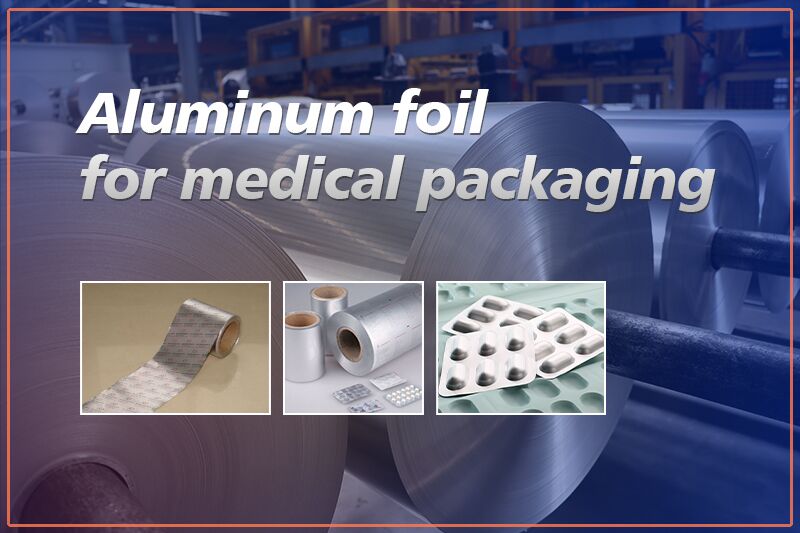
– Blister Packaging (PTP): The most common packaging for tablets and capsules. The foil heat-seals to PVC or PP backing, creating individual compartments with tamper-evident protection.
– Cold-Form Foil (Alu-Alu): Used for high-value, moisture-sensitive drugs. Multiple layers of aluminum laminated together offer stronger barrier performance and longer shelf life.
– Tropical Blister: Designed for high-humidity regions. The foil adds an extra moisture barrier.
– Medical Device Packaging: Syringes, needles, surgical instruments – keeps them sterile until use.
– Lidding for Pharmaceutical Containers: Seals oral liquids, powder injections, and other bottles. Requires good flatness and seal strength.
Don’t assume aluminum foil is bad for the environment. Advanced separation technologies recover aluminum from waste. Recycling uses a fraction of the energy needed for primary production. Also, today’s 20-micron foil achieves the same barrier performance as old 30-micron foil – reducing material consumption by more than 30%.
|
Alloy |
Characteristics |
Main Application |
|
8011 |
Good barrier, high strength, good flexibility |
Standard blister packaging – most widely used |
|
8021 |
Higher thickness and strength, excellent ductility |
Cold-form foil, biologics, antibiotics |
|
8079 |
Good deep-drawing performance, low pinhole count |
Cold-form, tropical blister |
|
1235 |
Good ductility, lower cost |
General pharmaceutical use where cost is key |
|
Thickness Range (mm) |
Application |
|
0.016 – 0.040 |
Standard blister packaging |
|
0.040 – 0.065 |
High-end pharmaceutical packaging |
|
0.025 – 0.080 |
Cold-form foil |
|
0.040 – 0.075 |
Tropical blister |
Choosing thickness requires balancing three factors: drug sensitivity, packaging machine compatibility, and cost.
When inspecting incoming material, focus on these hard metrics:
– Pinhole Density: For 0.0065mm foil, typically ≤150 pinholes/m². For 0.012mm foil, ≤10 pinholes/m².
– Tensile Strength: Generally ≥70–80 MPa. Ensures the foil doesn’t break during high-speed packaging.
– Elongation: ≥1.5–3.0%. Affects formability and tear resistance.
– Surface Quality: Flat, clean. No corrosion, scratches, oil spots, or wrinkles.
– Heat Seal Performance: Coating weight typically 4–8 g/m². Seal strength must be consistent.
Three types of problems occur most often in production and use. Knowing them helps you inspect with purpose.
Excessive Pinholes
Pinholes are tiny through-holes in the foil. Too many, and the barrier fails completely.
What to check: Ask for pinhole test reports for each batch. For small quantities, you can visually inspect on a light table. For standard blister foil, ≤150 pinholes/m² (for 0.02mm thickness – refer to your contract).
Surface Oil or Residue
Rolling oil may remain after the rolling process. Poor cleaning affects heat seal strength and can even contaminate the drug.
What to check: Look for visible oil stains. A quick method is the white paper rub test – lay the foil flat, rub a clean white paper firmly across the surface, and see if oil marks appear. Qualified medical foil should leave almost no visible oil.
Uneven Thickness or Poor Flatness
Large thickness variation leads to weak seals or jams on packaging lines. Poor flatness (curling, wavy edges) means the foil won’t run smoothly on machines.
What to check: Request thickness tolerance data (typically ±5% or better). After arrival, cut a random sample and lay it on a flat surface to check for obvious curling.
Weak Heat Seal Layer
If the heat-seal coating is uneven or under-cured, seals may be weak or leak.
What to check: Ask for heat seal strength test data. If possible, run a small sample on your own packaging line to verify seal performance directly.
This is the GMP standard specifically for primary pharmaceutical packaging materials. Without it, don’t proceed.
Reliable suppliers provide test reports from accredited labs and use statistical process control to keep batches stable.
This ensures the foil is non-toxic, has no leachables, and will not interact with the drug.
Pharmaceutical packaging needs vary widely. A supplier’s flexibility shows technical depth and market experience.
A good supplier is a technical partner, not just a seller.
– Stable capacity to meet long-term demand
– Small variation in key parameters from batch to batch (check COAs)
– Proper logistics packaging (wooden crates, moisture protection)
– Clear lead times and contingency plans
– Look at total cost, not just unit price (consider machine fit, yield rate, downtime)
– Pharmaceutical packaging market: USD 167.5 billion in 2025, projected to reach USD 245.8 billion by 2031 (CAGR 6.8%).
– Sterile medical packaging market: expected to exceed USD 100.2 billion by 2031.
– Three directions: Thinner yet stronger (20μm replacing 30μm), recyclable (Europe reaches 85% recovery for aluminum packaging), and stricter regulations (package integrity testing, serialization, traceability).
For reliable aluminum foil for medical packaging that meets ISO 15378 and global pharmacopoeia standards, Mingtai Aluminum offers consistent quality, customization, and on‑machine technical support. Visit our website for samples and technical data sheets.
Q1: What is the difference between 8011 and 8021 aluminum foil for medical use?
8011 is cost-effective for standard blister packaging, while 8021 offers higher strength for cold-form and moisture-sensitive drugs.
Q2: What is the typical thickness for pharmaceutical blister foil?
Standard blister foil is 0.016–0.040mm (most common 0.020–0.030mm), and cold-form foil is 0.025–0.080mm.
Q3: How can I quickly check for surface oil on medical foil before bulk purchase?
Use the white paper rub test – a clean paper rubbed on the foil should show no visible oil marks.
Q4: Why is pinhole testing so important?
Pinholes let moisture and oxygen through, degrading drugs, so low pinhole density is critical.
Q5: When should I use cold‑form foil (Alu‑Alu)?
Use cold-form foil for high-value, moisture-sensitive drugs that need extended shelf life.
Q6: How can I verify quality before placing a large order?
Request on-machine samples, batch COAs, third-party reports, and start with a trial order.
Mingtai Aluminum supplies pharmaceutical‑grade aluminum foil that meets ISO 15378 and global pharmacopoeia standards. We support custom specifications and on‑line technical assistance. Contact us for samples and data sheets.