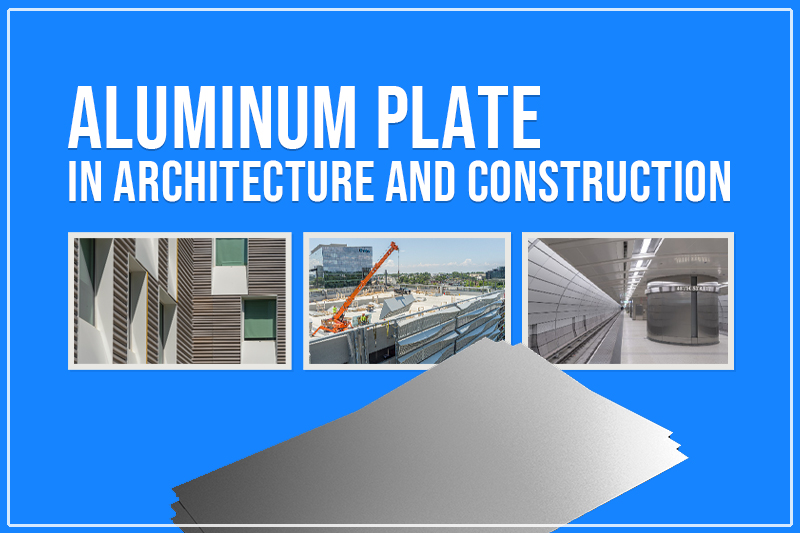
Aluminum plate in architecture and construction affects façade precision, structural loads, installation speed, and lifetime maintenance costs. The ten applications below cover exterior envelopes, interiors, transport infrastructure, and industrial buildings. Each section also highlights practical points that matter during specification and sourcing.
Aluminum plate for rainscreen cladding is often the outer layer of a rainscreen system. Its low weight and stable dimensions help create a pressure-equalized cavity and drainage path. When specifying, focus on flatness, alloy corrosion resistance, and substrate consistency before coating. Surface treatment and further processing are normally handled by specialist downstream operations.
In glass curtain walls, aluminum plate for curtain wall is used for spandrel infill, window frames, mullions, and transoms. Key points:
– Flatness and dimensional tolerances affect the visual quality of glass-to-metal joints.
– Bending and connection performance affect frame fabrication efficiency.
– Compatibility with thermal breaks and sealant systems matters.
Stable base material supply and a wide range of specifications directly support curtain wall fabricators’ production schedules.
Large-span roofs need a lightweight, weather-resistant, formable surface material. Aluminum plate for roofing suits standing seam systems, reduces roof dead load, and works with long panels and sliding clips. Design should consider thermal expansion, fixing spacing, and drainage slope. At the sourcing stage, confirm alloy temper and thickness tolerances to avoid cracking or excessive springback during site forming.
Aluminum plate for sun louvres or aluminum extrusions can form fixed and adjustable shading elements. They reduce solar heat gain while keeping the façade visually light. Selection depends on sun angles, louvre spacing, tilt angle, and outdoor weather resistance. For custom shading panels, base material flatness and edge quality affect the final appearance.
Interior applications emphasize fire safety, acoustics, and visual cleanliness. Solid aluminum plate for ceilings and wall linings can be used for ceilings, walls, and column covers; honeycomb aluminum panels suit large, high-flatness areas. Key points:
– Non-combustible rating;
– Panel flatness and joint control;
– Integration with acoustic, lighting, and HVAC terminals.
Thin interior panels demand tighter thickness tolerances, so tolerances should be clearly stated during sourcing.
Aluminum plate for bridge deck can be used for bridge decks, pedestrian bridges, tunnel linings, and noise barriers. Its low weight helps reduce dead load, making it suitable for strengthening and replacing existing bridges. Selection should consider alloy strength, weldability, fatigue performance, and galvanic corrosion protection at dissimilar metal connections. Such projects often require higher internal quality and non-destructive testing of the base material.
Offshore platforms, helidecks, equipment enclosures, and seawater-exposed structures often use aluminum plate for marine structures. Aluminum offers strong corrosion resistance in marine atmospheres and seawater, and weight savings help transport and lifting. Marine projects demand higher internal quality, testing, and thickness uniformity, so metallurgical cleanliness and batch consistency should be confirmed during sourcing.
Modular buildings pursue factory precision and on-site speed. Aluminum plate for modular buildings can be prefabricated into wall panels, roof panels, and module envelopes. Advantages:
– Lightweight for transport and lifting;
– Dimensionally stable for standardized connections;
– Can be combined with honeycomb or insulation cores to improve stiffness and thermal performance.
Base material cutting tolerances and edge straightness directly affect module connection efficiency and sealing.
Entrance canopies, soffits, edge trims, and decorative covers often use aluminum plate for canopies and soffits. These elements are seen up close, so flatness, edge straightness, and surface uniformity are critical. Aluminum’s low weight also helps simplify support for cantilevered structures. During sourcing, choose base material with stable shape control to reduce later leveling work.
Industrial plants, swimming pools, water treatment facilities, and chemical workshops—especially corrosive or high-humidity environments—can use aluminum plate for industrial buildings for walls and roofs. Aluminum requires relatively low maintenance and suits projects sensitive to lifetime costs. 5xxx alloys are often considered for corrosion-resistant environments. Stable delivery schedules are especially important for industrial projects that follow fixed construction milestones.
For projects that require aluminum plate in architecture and construction, Henan Mingtai supplies base material in multiple alloys and specifications for curtain walls, roofing, and industrial envelopes, without downstream surface treatment or further processing. Stable base material quality and supply capacity help reduce processing waste and schedule risk.
Q: Are aluminum plate and aluminum composite panel the same?
A: No, because ACP contains a plastic core while solid aluminum plate is more suitable for demanding fire and structural applications.
Q: Which alloys are common in architectural aluminum plate?
A: Curtain walls and roofing often use 3xxx and 5xxx alloys; marine or