What does a truck floor endure every day? Heavy loads, constant friction, sun, rain, and oil spills. Traditional steel floors are too heavy, increasing fuel costs. Wooden floors rot and have a short lifespan. Smooth surfaces are slippery and unsafe.
The search for a floor material that is both tough and cost-effective is crucial. This is why aluminum chequered plates have become the top choice for modern fleets.
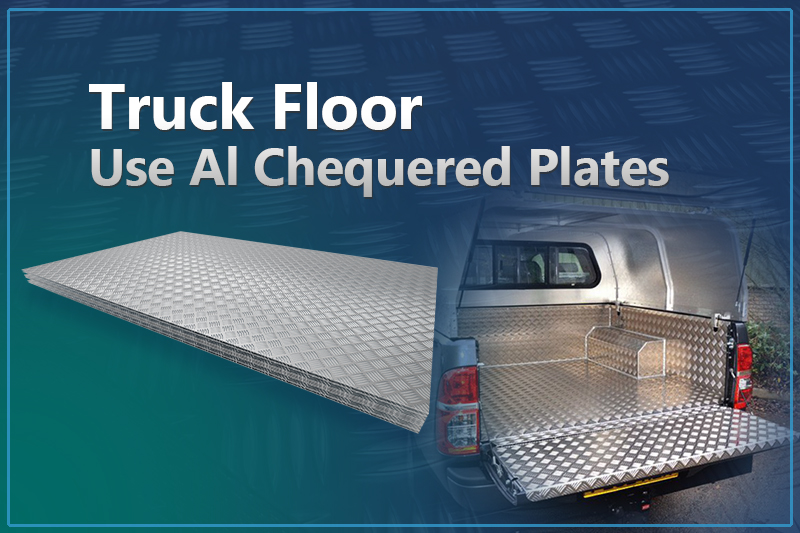
The raised pattern provides all-weather grip. It ensures safety for personnel and cargo, rain or shine. The grooves also drain water and shed debris.
Aluminum is about one-third the weight of steel. Switching can cut floor weight by over 50%. This means: lower fuel consumption, higher payload capacity, and longer range. Every kilogram saved boosts your profit.
Aluminum forms a natural protective layer. It resists rust far better than steel. It stands up to rain, road salt, and sea spray. It needs minimal maintenance and lasts years longer.
High-strength alloy combined with the pattern creates a robust structure. It handles forklifts and heavy loads without bending. The floor stays flat and reliable.
The surface is smooth and non-porous. Dirt and grime don’t stick. A simple sweep or wash is enough. This is ideal for food transport or cold chain logisticswhere hygiene matters.
– 5083/5086 Alloy: Top choice. Excellent corrosion resistance and good strength. Known as “marine-grade,” perfect for harsh conditions.
– 6061 Alloy: Cost-effective and versatile. Suitable for general use.
– Light-Duty Trucks: 3-4mm is sufficient for everyday goods.
– Heavy-Duty Trucks/Trailers: 5-6mm minimum, 6mm+ is recommended for safety.
– Special Applications (e.g., mining): 8mm or thicker.
– 5-Bar Pattern: Most common. Excellent slip resistance and directional grip. Good for forklifts.
– Diamond Pattern: All-around grip. Attractive look and better drainage.
Pre-cut to your trailer dimensions. This reduces on-site work. We also offer drilling and edge finishing for easy installation.
– Flatbed Trailers: The weight saving directly increases payload profit.
– Box Trucks/Vans: Resists corrosion, easy to clean, keeps cargo area clean.
– Dump Truck Beds: Handles impact and abrasion from frequent loading.
– Reefer Trucks: Withstands low temperatures and condensation.
– Loading Docks: Safe and durable for busy platforms.
Three-Step Buying Guide
– Base Preparation: Ensure the subframe is flat and solid.
– Fixing Method: Welding or high-strength bolts both work. Bolting allows for easier future replacement.
– Gap Management: Leave small expansion joints between plates.
– Edge Protection: Deburr edges to prevent cuts.
Regular cleaning is usually enough. Avoid long-term contact with strong chemicals. Periodically check fasteners for tightness.
Choosing Truck Floor Use Al Chequered Plates is more than a simple upgrade. It’s a strategic move for better efficiency. The benefits in weight savings, safety, and durability pay off over the vehicle’s entire life.
Upgrade your fleet with durable aluminum chequered plates for lower costs and higher safety. Mingtai Aluminum provides professional solutions, ensuring reliable performance for every mile.
Q1: Are aluminum chequered plates more durable than steel?
A: Yes, for corrosion resistance. They last much longer in wet or salty conditions, especially with alloys like 5083.
Q2: Can heavy loads dent an aluminum floor?
A: Yes, if too thin. Choose the right thickness (5-6mm or more). Properly specified plates handle heavy cargo and equipment well.
Q3: Do I need special tools to install it?
A: No. Standard tools for cutting, drilling, and fastening work. Aluminum is actually easier to work with than steel.
Q4: Is an aluminum floor more expensive?
A: Initial cost may be higher than basic steel. But total cost of ownership is often lower due to fuel savings, less maintenance, and longer life.