In the fields of cable foil, battery foil, tape foil, and packaging applications, 1235 aluminum alloy is one of the most widely used grades. With an aluminum content of ≥99.35%, it offers excellent ductility and corrosion resistance, making it an ideal base material for downstream processing.
But when you search for a 1235 aluminum foil factory, how do you identify which supplier is worth partnering with? Sourcing is not just about comparing prices. You need to evaluate whether the factory can consistently deliver products that meet your technical requirements. This article takes a practical procurement perspective to help you clarify the key issues.
The production of 1235 aluminum foil starts with high-purity molten aluminum. A good factory typically has a complete process from melting and casting to rolling:
– Alloy composition control: Trace elements like iron, silicon, and copper in the molten aluminum must be precisely controlled. This directly affects the mechanical properties and subsequent processing performance of the foil.
– Rolling precision: Hot tandem rolling and multiple passes of cold rolling ensure flat strip shape and uniform thickness. Advanced rolling mills equipped with automatic gauge control (AGC) systems are the foundation for product consistency.
– Annealing process: Depending on the final application (soft O temper or hard H18 temper), the control of annealing temperature and time determines the elongation and strength of the foil.
Different uses have varying requirements for foil thickness and performance. Here are common application scenarios:
– Cable foil: Used for shielding in communication cables and power cables. Common thickness ranges from 0.02mm to 0.2mm. It requires good electrical conductivity and stable tensile strength.
– Battery foil (current collector): Used as the base material for lithium-ion battery cathode current collectors. Typical thickness ranges from 0.012mm to 0.02mm. It demands extremely low pinhole rates and high surface cleanliness.
– Tape foil: Used as the base for pressure-sensitive adhesive tapes. It requires adequate surface wetting tension to ensure firm adhesion of the adhesive layer.
– Packaging foil: Used for food and pharmaceutical packaging. Thickness is typically between 0.018mm and 0.022mm. It needs to be pinhole-free, non-toxic, and moisture-proof.
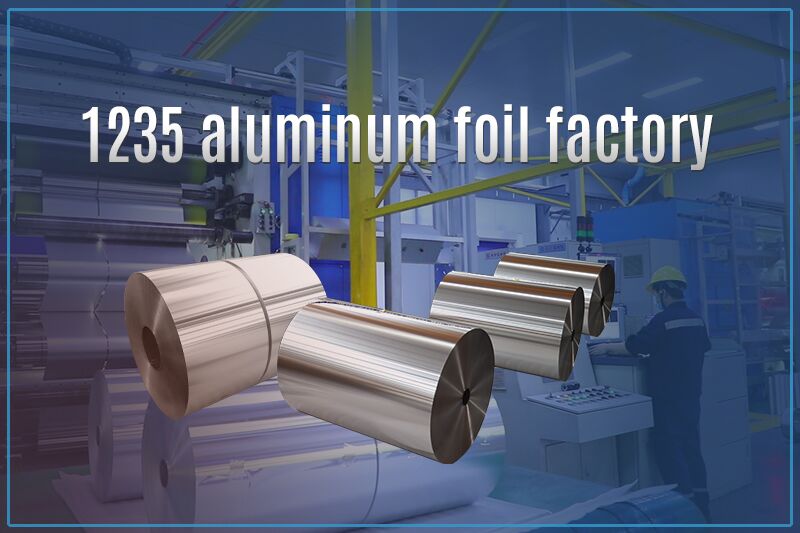
When evaluating a supplier, don’t just look at samples. Focus on the technical indicators for bulk deliveries. These five parameters are hard indicators of a factory’s process capability:
1. Thickness Tolerance
Quality aluminum foil should control thickness tolerance within ±2%. Large tolerances cause unstable tension during downstream slitting or laminating, increasing scrap rates.
2. Pinhole Rate
When foil thickness drops below 0.02mm, the pinhole rate becomes critical. Too many pinholes cause air leakage in packaging or short-circuit risks in battery foil. Good factories use high-purity molten aluminum and clean production environments to keep pinhole density extremely low.
3. Surface Wetting Tension
This is a key measure of surface cleanliness. For tape foil or battery foil requiring coating, surface wetting tension should be no less than 32 dynes/cm. Otherwise, adhesives or coatings won’t bond firmly.
4. Flatness
The telescoping (misalignment) of the foil coil end face should be controlled within ±1.0mm. Poor flatness leads to wrinkling or deviation during downstream processing.
5. Batch-to-Batch Consistency
This is often overlooked. A good factory locks in its processes to ensure high consistency in mechanical properties (tensile strength, elongation) across different batches, saving you from constantly adjusting your production line parameters.
Q: What is the typical thickness range for 1235 aluminum foil?
A: Standard supply thickness ranges from 0.016mm to 0.2mm. Ultra-thin applications like battery foil can go down to 0.012mm.
Q: Why is the pinhole rate important?
A: Pinholes are tiny holes in ultra-thin foil. They can cause packaging leaks or breakage during battery foil coating, directly impacting final product quality.
Q: What is the difference between O temper and H18 temper?
A: O temper is annealed (soft), suitable for flexible packaging. H18 temper is full-hard, offering high strength for cable foil or battery current collectors.
Q: What should I check upon receiving the foil?
A: Focus on thickness uniformity, surface cleanliness (no oil stains), end face flatness, and whether mechanical properties match the order requirements.
As a professional 1235 aluminum foil factory, Mingtai Aluminum provides stable product supply and consistent quality for cable, battery, and packaging applications. Contact us to discuss your specific alloy and dimension requirements.