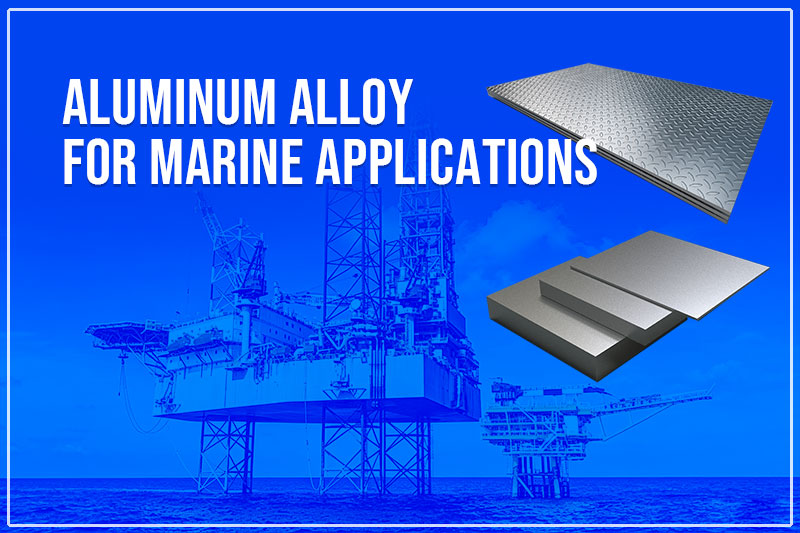
If you’re searching for “aluminum alloy for marine applications,” chances are you’re facing a real decision — whether you’re specifying materials for a new vessel, evaluating suppliers, or trying to understand why one alloy costs more than another. The marine environment is unforgiving: constant salt spray, humidity, and wave impact put extreme demands on any material. Choosing the wrong alloy can undermine your entire project. This guide cuts through the technical jargon and answers the questions that actually matter to buyers and engineers.
When it comes to marine applications, three alloys dominate the conversation: 5083, 5086, and 6061. Here’s what you need to know about each.
5083 Aluminum — The Industry Standard
5083 is the most widely specified alloy for larger vessels and offshore structures. It contains 4.0–4.9% magnesium, giving it outstanding resistance to seawater corrosion. In H116 temper, it delivers tensile strength up to around 290 MPa. Its real advantage? It retains strength after welding, making it ideal for hulls, decks, and critical load-bearing structures.
5086 — The Practical Alternative
5086 contains slightly less magnesium (3.5–4.5%) and offers comparable corrosion resistance with marginally lower strength—around 270 MPa. Where it shines is formability and stress corrosion cracking resistance at weld seams. It’s the go-to choice for smaller vessels, fuel tanks, and marine equipment where cost and workability matter as much as raw strength.
6061 — The Structural All-Rounder
6061 is a heat-treatable 6xxx alloy (magnesium-silicon) that achieves higher strength—around 310 MPa in T6 temper. It machines beautifully and anodizes well. But there’s a catch: its corrosion resistance in seawater is not as robust as the 5xxx series. Use 6061 for above-water structures like masts, railings, and fittings—not for hull plating or anything permanently immersed.
|
Alloy |
Key Strength |
Best For |
|
5083 |
Highest corrosion resistance, weld strength |
Hulls, offshore platforms, cryogenic tanks |
|
5086 |
Formability, weld seam SCC resistance |
Boat hulls, fuel tanks, marine equipment |
|
6061 |
Machinability, heat-treatable strength |
Masts, railings, structural supports |
This is probably the question you hear most: *“If aluminum corrodes, why use it in saltwater?”*
The answer lies in the natural oxide layer. Aluminum alloys form a dense, stable oxide film on their surface that blocks chloride ion penetration. In 5xxx series alloys, magnesium enhances this protection. The result? 5083 and 5086 resist seawater corrosion without paint or anodizing. That’s a major maintenance saving compared to steel, which requires regular painting and rust removal.
A note on H116 vs H321: If you’ve spent time comparing specs, you’ve probably wondered which temper is more corrosion-resistant. The short answer: both are essentially identical in corrosion performance under marine standards like ASTM B928. Both are specially stabilized tempers designed to resist stress corrosion cracking. The difference is in the manufacturing route, not the final performance. Choose based on availability and cost, not corrosion resistance.
Aluminum’s density is about 2.7 g/cm³—roughly one-third that of steel. This translates to 20–30% weight reduction in hull structures. What does that mean in practice?
– Higher speed with the same power
– Lower fuel consumption and reduced emissions
– Increased payload or passenger capacity
– Better stability due to improved weight distribution
For high-speed ferries, patrol boats, and yachts, these benefits are game-changers. And because aluminum doesn’t require frequent anti-corrosion painting like steel, the long-term maintenance savings add up significantly.
Not all marine aluminum is created equal. Here’s what smart buyers check before placing an order.
1. Do you have classification society certification?
This is non-negotiable. Look for certification from DNV, ABS, BV, LR, or CCS. Certified plates are clearly marked with the society stamp, heat number, alloy, temper, and dimensions. Without proper certification, your material won’t pass inspection.
2. Can you provide mill test certificates?
Every shipment should include MTCs showing chemical composition and mechanical properties. Don’t accept vague promises—ask for the documentation upfront.
3. What’s your quality control process?
Look for suppliers that conduct tensile, salt spray, and intergranular corrosion tests. Surface quality matters too—poor flatness or oil stains create headaches during fabrication.
4. Are you comparing initial price or lifecycle cost?
5xxx alloys may cost more upfront than 6xxx or some steels, but lower maintenance and longer service life often make them cheaper over the full project lifecycle.
If you’re fabricating with marine aluminum, welding is where good material choices can go wrong.
For 5xxx series (5083, 5086) :
– Use argon shielding gas and 5356 filler wire to avoid porosity
– Thick plates may need preheating (up to 150°C)
– Welds retain good strength—one of the key advantages over some other alloys
For 6061:
– More prone to hot cracking; use 4043 filler alloy
– Post-weld heat treatment may be needed to restore full strength
One critical warning: Avoid direct contact between aluminum and stainless steel or copper in marine environments. This creates galvanic corrosion—the aluminum will corrode preferentially. Use insulation or isolation where dissimilar metals meet.
Selecting the right aluminum alloy for marine applications comes down to three questions: *Where will it be used? How will it be loaded? What’s the real cost over time?* For hulls and submerged structures, 5083 is the proven standard. For cost-sensitive or highly formable applications, 5086 is a strong contender. For above-water fittings and structures, 6061 delivers machinability and strength.
For over two decades, Mingtai Aluminum has supplied certified marine-grade 5083, 5086, and 6061 plates to shipbuilders worldwide—backed by full classification society certification and mill test documentation. Learn more at www.mingtai-al.com.
Q: What’s the most corrosion-resistant aluminum alloy for marine use?
A: 5083 aluminum alloy offers the highest seawater corrosion resistance among common marine grades due to its 4.0–4.9% magnesium content.
Q: What’s the real difference between 5083 H116 and H321?
A: Both offer identical corrosion resistance under marine codes—the difference is in manufacturing, not performance.
Q: Can I use 6061 aluminum in saltwater?
A: Yes, but only for above-water structures—for direct seawater exposure, choose 5083 or 5086.
Q: How much weight can aluminum save compared to steel?
A: Aluminum is about one-third the weight of steel, enabling overall hull weight reductions of 20–30%.
Q: Does marine-grade aluminum need painting or coating?
A: No—5xxx series alloys form a natural protective oxide layer that provides corrosion resistance without additional coatings.