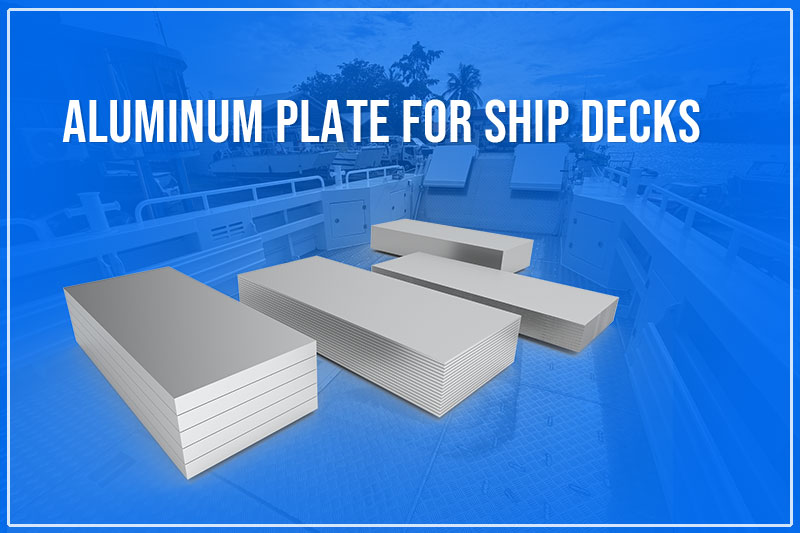
When designing a vessel, the choice of deck material directly affects performance and service life. More shipowners and builders are switching to aluminum plate for ship decks instead of traditional steel. This is no accident – the lightweight nature and natural seawater resistance of aluminum deliver real benefits for ferries, workboats, and yachts.
So what do customers really care about when searching for “aluminum plate for ship decks”? This article covers performance, standards, cost comparisons, and common questions to help you make an informed choice.
Lightweight
Aluminum has a density of about 2.7 g/cm³ – only one-third that of steel. Using aluminum for upper decks significantly lowers the vessel’s center of gravity, improving stability. Less total weight also means lower fuel consumption and higher cargo capacity. For fast ferries or coastal passenger ships, every ton saved directly adds to operating profit.
Seawater corrosion resistance
Steel is steel’s worst enemy in seawater. Ordinary steel decks need regular painting and rust removal – expensive and time‑consuming. Aluminum naturally forms a dense oxide layer that resists salt spray almost completely. This makes aluminum an excellent choice for upper structures and outboard platforms.
Reliable strength
Marine aluminum is not “soft metal.” Take alloy 5083: its tensile strength reaches 270–350 MPa, close to that of ordinary structural steel, easily handling foot traffic, equipment loads, and wave impact. With proper stiffener design, aluminum decks fully meet classification society requirements.
Easy repair
Aluminum plates can be cut and welded (using MIG or TIG) with flexibility on site. Even local damage can be patched without heavy equipment.
Classification society approval
Marine materials must be certified. Common approvals include ABS, LR, BV, and CCS. Customers often ask: “Does your aluminum plate come with a mill certificate for class?” A reliable supplier should provide the relevant certificates.
Recommended alloys
– 5083 – Highest strength, excellent corrosion resistance. For heavy‑duty decks, tugs, cargo ships, Ro‑Ro vessels.
– 5086 – Slightly lower strength than 5083, but better weldability and formability. Good for medium‑load areas.
– 6061 – Lower strength, lower cost. Used for non‑structural decks or interior superstructures.
Typical dimensions
Thickness usually ranges from 4 mm to 20 mm, with 6, 8, 10, and 12 mm being most common. Width up to 2000–2500 mm, length customised to shipyard needs. Checker plate or five‑bar tread plate is common for decks – the pattern is rolled directly during production (no extra surface treatment) and provides excellent slip resistance.
Preventing galvanic corrosion
When aluminum contacts steel in the presence of seawater, galvanic corrosion occurs – aluminum (anode) deteriorates faster. The solution is simple: use insulating gaskets, isolation coatings, or aluminum‑steel transition joints at connections. This detail is a common cause of field failures, so pay special attention.
Many customers hesitate because of the higher initial material cost. Yes, aluminum plate costs more per ton than steel. But over the full life, the picture changes:
– Weight – Aluminum is 2/3 lighter → saves fuel, increases cargo.
– Corrosion protection – Aluminum needs no painting → steel needs recoating every 2‑5 years.
– Initial material cost – Higher for aluminum, but total life‑cycle cost is often lower, especially over a 20+ year service life.
– Scrap value – Aluminum retains high residual value; you get meaningful money back at disposal.
In short, for vessels where operating economy and low maintenance matter, aluminum is the smarter choice.
Q: Is aluminum deck suitable for all vessel types?
A: No. Very large bulk carriers still use steel for main decks due to rigidity needs. But for small to medium vessels, fast ferries, workboats, and yachts, aluminum works very well.
Q: Any welding tips for aluminum decks?
A: Use 5356 filler wire, MIG or TIG process, control heat input, and back‑purge with gas to prevent oxidation.
Q: How long does an aluminum deck last?
A: With proper design and galvanic protection, 20–30 years – far longer than a painted steel deck’s first major repair cycle.
For customers seeking reliable marine aluminum, Mingtai Aluminum supplies certified deck plates with ABS, LR, CCS, or BV approvals. Choose Mingtai for consistent quality and on‑time delivery – your trusted partner for aluminum plate for ship decks.
Q: What is the most common aluminum alloy for ship decks?
A: 5083 – best combination of high strength and seawater corrosion resistance.
Q: Do aluminum ship decks need painting?
A: No – the natural oxide layer is enough; painting is only for appearance.
Q: Can aluminum deck plates be welded directly to steel?
A: No – use transition joints or insulated fasteners to prevent galvanic corrosion.
Q: What thickness for a small vessel deck?
A: 6–8 mm for light traffic areas, 10–12 mm for heavy load zones (e.g., crane pads).
Q: Does Mingtai Aluminum provide classification society certificates?
A: Yes – Mingtai can supply mill certificates with ABS, LR, CCS, or BV upon request.